
 April 15, 2026
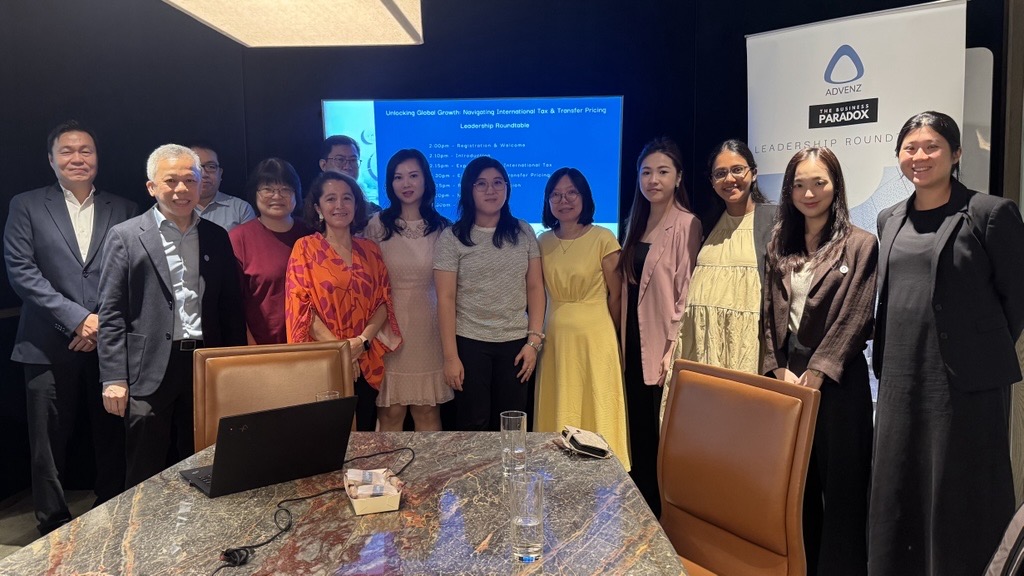
On 26 March 2026, we hosted our second leadership round table unpacking the international tax landscape, with a focus on common pitfalls in Withholding Tax (WHT) and Transfer Pricing (TP) regulations. The session highlighted how TP decisions directly influence a company’s tax position across jurisdictions and the importance of maintaining robust documentation. We also examined the limits of tax and TP planning, emphasising the need for genuine economic substance, alongside common TP disputes and emerging global trends.
Avoiding Common Withholding Tax Pitfalls

Our first speaker, Sasireka Amplagan, opened the session with a practical look at when WHT applies, covering payments to non‑residents such as service fees, management fees, and equipment rentals.
We unpacked some of the most common pitfalls in WHT, many of which stem from seemingly small missteps. A key error is misidentifying the “date of payment” which is triggered by the earliest of several milestones, including contract dates or invoice dates.
Another common mistake is holding back filings while waiting for the Certificate of Residence (COR). However, compliance timelines do not pause for documentation. Returns must be filed by the deadline, with the COR submitted subsequently within the allowed timeframe.
WHT tax is highly detail-sensitive. The speaker highlighted how administrative oversights can quickly translate into financial impact. Minor errors like selecting incorrect payment types or wrong country of residence, or making payment before filing can all lead to unintended costs or compliance issues.
Transfer Pricing in a Global Context
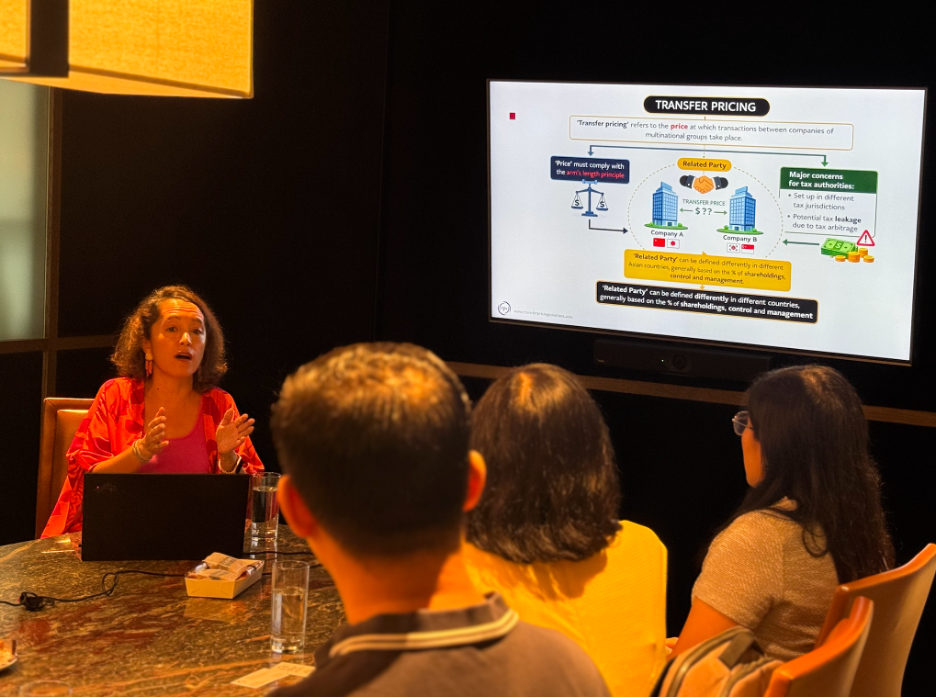
Our second speaker, Adriana Calderon, co-founder of Transfer Pricing Solutions Asia, led the discussion on TP and how it sits at the centre of the global tax system. At its core, TP is triggered whenever there are transactions between related entities, such as headquarters and subsidiaries, or branches and permanent establishments, and it determines how profits are allocated across jurisdictions. Tax authorities closely review these dealings as they can shift profits and cause tax leakage.
While most countries broadly align with OECD principles, local interpretation and enforcement vary significantly. Some tax authorities focus heavily on profit outcomes while others place greater weight on technical compliance and arm’s length methodology. This makes local knowledge and jurisdiction-specific experience critical in managing TP risk.
The Foundation of Transfer Pricing Compliance
A key theme discussed was that TP directly affects a company’s tax position and is increasingly scrutinised. Tax authorities now look for genuine operations behind the paperwork. It follows a hierarchy: assessing whether real substance exists (assets, people, decision‑making, value creation), and only then whether pricing meets the arm’s length standard.
Intercompany transactions must be substantiated by people, functions, and tangible value within the entities. Business structures must be driven by commercial rationale, with tax planning as a secondary outcome. Proving that a structure would exist even without tax advantages is the strongest defense against disputes and tax leakage.
Navigating Asia’s Diverse Tax Landscape
Strong documentation remains the cornerstone of TP, serving both compliance and defence against growing scrutiny.
In Singapore, a unique challenge exists because tax authorities operate within a statutory window of five years. This means an audit regarding today’s transactions might only be initiated years from now. Businesses are expected to prepare contemporaneous documentation at the time of filing. Modern electronic filing systems make it easy for authorities to detect if documentation was created retroactively, and failing to have it ready when requested can lead to non-compliance surcharges and a loss of credibility.
Robust documentation must start with the legal intercompany agreement. Many businesses neglect this, viewing intercompany transactions as movements that do not require formal contracts. The speaker shared that an agreement is the very first document a tax authority requests and the absence of documentation can put companies at an immediate disadvantage.
In many Asian jurisdictions, TP documentation requirements vary, with some cases where it is mandatory and non-prepared documentation may even result in compliance-related surcharges. In countries like Indonesia or Vietnam, where tax authorities may have high revenue targets, a clear, legally binding contract serves as a primary layer of defense. By treating intercompany agreements with the same level of legal rigor as third-party contracts, businesses can close a major compliance gap. Combining strong documentation with local insight is essential to effectively managing TP risk across different markets.
Common Areas of Dispute
Benchmarking quality and data selection are central to many TP disputes. During the discussion, a participant asked about the challenges in benchmarking and how it is applied in practice. It was asked whether a specific “percentage of similarity” or revenue threshold is required when selecting comparables, given the challenge of finding near-identical matches. The clarification is that no revenue-based similarity threshold exists. Instead, comparability should be evaluated on the basis of product type, industry, and functional profile, placing priority on what the company does rather than its size.
The speaker reinforced that TP is not simply about setting a price, but about demonstrating that the outcome aligns with what independent parties would have agreed under comparable circumstances. Reliance on static benchmarking approaches can be risky. Where profitability shifts due to external shocks, taxpayers need to clearly explain these movements. Otherwise, authorities may interpret deviations as pricing issues and adjust taxable income accordingly.
Another key area of scrutiny in TP relates to loss-making entities with significant related-party transactions. Where a company is in a loss position despite high-value intercompany dealings, it is more likely to attract audit attention, with authorities expecting clear explanations as to why those losses are not driven by TP. In such cases, taxpayers must be prepared to demonstrate that the outcomes are commercially justified and not the result of pricing distortions.
Transfer Pricing in a Disrupted World
Our speaker concluded by highlighting a series of external forces that are actively reshaping the TP landscape. Recent global disruptions, including the COVID-19 pandemic, trade tariffs, and ongoing geopolitical conflicts, have significantly altered how businesses operate across borders. These events have introduced greater volatility into pricing and profitability, making it more challenging to maintain stable TP outcomes.
In addition, rising costs in key areas such as energy and food, have further complicated traditional pricing models. These cost pressures can impact margins across different entities within a group, requiring taxpayers to carefully assess whether fluctuations in profitability are commercially driven or require adjustment and explanation from a TP perspective.
Against this backdrop, the introduction of global minimum tax rules for large multinational groups adds another layer of complexity. The focus is no longer solely on ensuring arm’s length pricing, but also on meeting minimum effective tax rate requirements across jurisdictions. These recent developments underscore the need for TP policies to remain flexible and responsive to evolving economic and regulatory realities.
Looking Ahead

The session made clear that WHT and TP are no longer just compliance exercises. With global tax rules shifting amid economic and geopolitical change, businesses must take a proactive and integrated approach. Our speakers underscored that sustainable tax outcomes are built on three pillars: strong fundamentals, genuine economic substance, and proactive planning. In a landscape shaped by evolving regulations and global disruptions, those who embed these principles into their operations will be better positioned to manage risk, defend their positions, and adapt with confidence.